
Mastering Your Smart Thermostat: Your Guide to Smarter Home Heating and Cooling
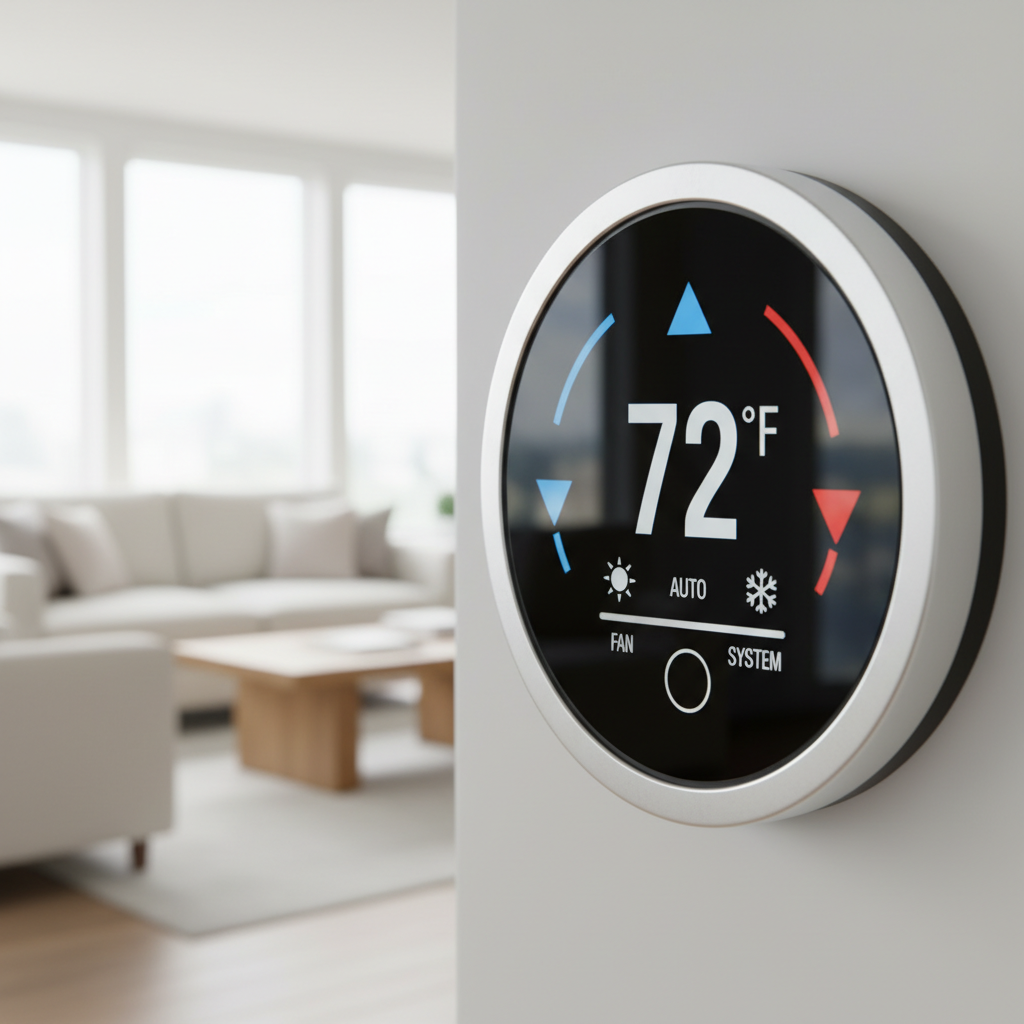
In a world increasingly driven by smart technology, your home’s thermostat has evolved far beyond a simple on/off switch. Smart thermostats offer incredible potential for energy savings, enhanced comfort, and even remote control. But for many, the array of features and settings can seem overwhelming. This article will demystify the smart thermostat, guiding you through its core functionalities so you can confidently optimize your home’s heating and cooling – saving money and staying comfortable without needing to be a tech guru.
Understanding the Basics: What Makes Your Thermostat “Smart”?
Before diving into optimization, let’s understand what sets a smart thermostat apart from its traditional counterparts. The key lies in its connectivity and intelligence. Unlike simple programmable thermostats that follow a rigid schedule, smart thermostats connect to your home Wi-Fi network, allowing for remote access via smartphone apps. More importantly, many feature advanced sensors and algorithms that learn your habits, adjust to local weather conditions, and even detect when you’re away from home. Think of it as having a personal climate assistant for your house. This intelligence is crucial for both convenience and maximizing energy efficiency, as it can fine-tune your home’s environment without constant manual input.
Setting Schedules and Utilizing Learning Capabilities for Maximum Efficiency
One of the most powerful features of a smart thermostat is its ability to create custom heating and cooling schedules. While this might sound similar to older programmable thermostats, smart versions offer significantly more flexibility and often proactively learn your preferences. Instead of manually inputting every temperature change, many smart thermostats observe your adjustments over a week or two, then suggest an optimized schedule. For instance, if you consistently turn down the heat before bed and raise it before waking up, the thermostat will eventually automate this. Don’t be afraid to experiment with these learning features; the more data it gathers, the better it becomes at predicting your needs. A great starting point is to set a “sleep” temperature (generally cooler in winter, warmer in summer) and an “away” temperature that conserves energy when no one is home. These small adjustments, automated over time, can lead to significant savings on your utility bills.
Leveraging Geofencing and Remote Control for Unmatched Convenience
Imagine your house cooling down just as you leave work, ensuring it’s comfortable the moment you walk through the door. This is the magic of geofencing, a feature available on many smart thermostats. Geofencing uses your smartphone’s location to determine whether you’re home or away. When you leave a pre-defined boundary around your house, the thermostat can automatically adjust to an energy-saving temperature. As you approach home, it can then begin heating or cooling again. This proactive adjustment means you’re not paying to heat an empty house, nor are you arriving home to an uncomfortable environment. Beyond geofencing, the ability to remotely control your thermostat via a smartphone app offers immense convenience. Forgot to turn down the AC before leaving for vacation? No problem, a few taps on your phone will do the trick. Checking on your elderly parents’ home temperature while you’re away is also simplified. The ease of use through these remote controls is a major draw for many smart thermostat owners.
Integration with Smart Home Ecosystems and Voice Assistants
For those building a connected home, smart thermostats seamlessly integrate with various smart home ecosystems like Amazon Alexa, Google Assistant, or Apple HomeKit. This integration opens up a world of convenience through voice control. Instead of manually adjusting the temperature or even reaching for your phone, you can simply say, “Hey Google, set the thermostat to 72 degrees,” or “Alexa, turn up the heat.” This hands-free control is not only convenient but also beneficial for accessibility. Furthermore, integration often allows for automated routines where your thermostat can work in conjunction with other smart devices. For example, when your smart door lock detects you’ve left, it could trigger your thermostat to enter energy-saving mode. These interconnected capabilities enhance the overall smart home experience, making your life not just easier, but also more efficient.